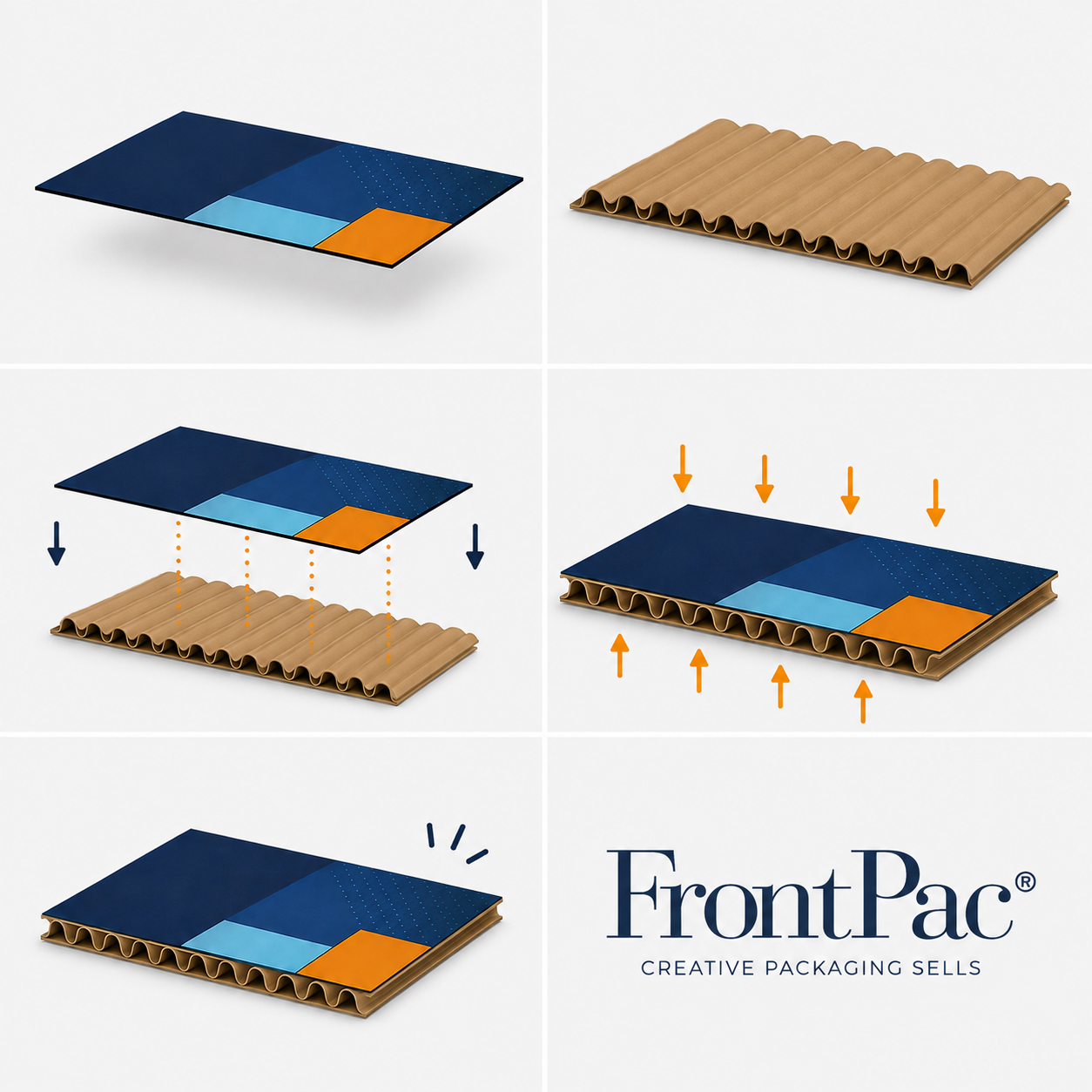
Lamination combines two materials to create packaging that is both visually appealing and durable. By gluing a printed sheet onto corrugated board, you achieve a strong, stable structure with high-quality printing. But what exactly does lamination entail? And why choose to laminate packaging instead of printing directly onto the corrugated board?
What is lamination?
Laminating involves bonding a printed sheet of paper to another material - in our case, corrugated cardboard. First, we print your packaging design onto a separate sheet. Then, we apply a thin layer of adhesive and press the sheet and the corrugated cardboard together.
In this way, two properties are combined:
- The print sheet provides a smooth surface and high quality for colors, images, and details.
- The corrugated cardboard provides strength, stability, and a durable construction.
The result is packaging that combines high-quality printing with the functional properties of corrugated board.
Advantages of lamination
As previously mentioned, the greatest advantage of lamination is the ability to combine high print quality with the strength of corrugated board.
A separate print sheet provides a smoother printing surface than the structure of corrugated board. The technique is therefore particularly well-suited for packaging featuring images, colors, or graphic details that require high-precision reproduction.
At the same time, the corrugated board provides the structure with the stability that many packages require. This makes lamination an attractive option when both visual appeal and packaging functionality are of great importance.
Is lamination right for you?
Does your packaging need to combine high-quality printing with the strength and stability of corrugated board? If so, lamination could be a great option. At the same time, every package has its own specific requirements. We would be happy to help you find the solution that best suits your needs in terms of design, functionality, and requirements.